Ethereum is a programmable blockchain. It lets developers build applications that run without a central authority, and it lets anyone in the world send value, borrow money, or trade assets without a bank in between.
Most people hear about Ethereum as a cryptocurrency. That part is true: Ether (ETH) is the native token of the network, and it sits second only to Bitcoin by market cap, with roughly $200 to $400 billion in market value depending on the cycle. But ETH is fuel, not the point. The point is what runs on top of it.
This guide covers what Ethereum is, how it works, what you can do with it, and how it differs from Bitcoin. No jargon left unexplained.
Ethereum in simple terms: the short answer
Think of Ethereum as a computer that nobody owns. It runs on thousands of machines around the world at the same time. No company controls it. No government can shut it down. Anyone can build on it, and anyone can use it.
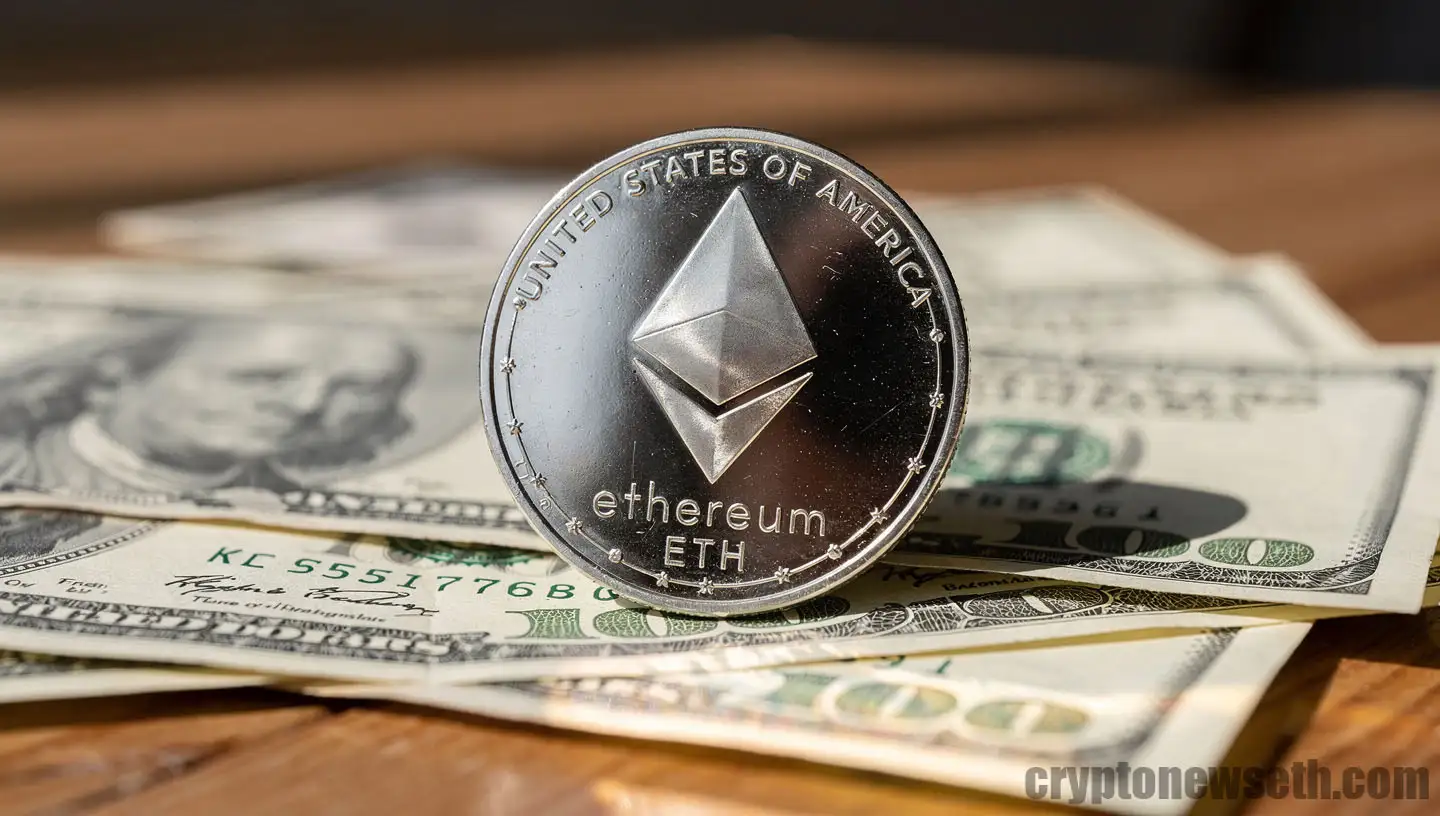
That computer runs smart contracts: programs that execute automatically when certain conditions are met. A smart contract does not need a lawyer, a bank, or a middleman. The code runs exactly as written, every time.
That is the core idea. Everything else, DeFi, NFTs, DAOs, stablecoins, follows from it.
Who created Ethereum?
Vitalik Buterin wrote the Ethereum white paper in November 2013. He was 19 years old. At the time, he had already co-founded Bitcoin Magazine and spent two years studying how Bitcoin worked and where it fell short. His conclusion: Bitcoin was too limited. It could transfer value, but it could not run programs.
Buterin circulated the white paper to a small group of developers. The response was strong enough that he dropped out of the University of Waterloo in 2014, took a $100,000 Thiel Fellowship grant, and went to work on Ethereum full time.
He did not build it alone. The co-founders who joined him included Gavin Wood, who wrote the technical specification called the Yellow Paper and created the Solidity programming language; Joseph Lubin, who later founded ConsenSys; Charles Hoskinson, who later founded Cardano; and Anthony Di Iorio, Mihai Alisie, and Amir Chetrit.
The team raised funds through a crowdsale in 2014, collecting around 31,000 BTC, worth roughly $18 million at the time. The Ethereum network went live on 30 July 2015. That day is still called Frontier. Read more about this topic in the article who created Ethereum?
How Ethereum work?
Ethereum is a blockchain. That means every transaction is recorded in a chain of blocks, each one linked to the last. Thousands of computers, called nodes, hold a copy of that chain. They agree on which transactions are valid and add new blocks roughly every 12 seconds.
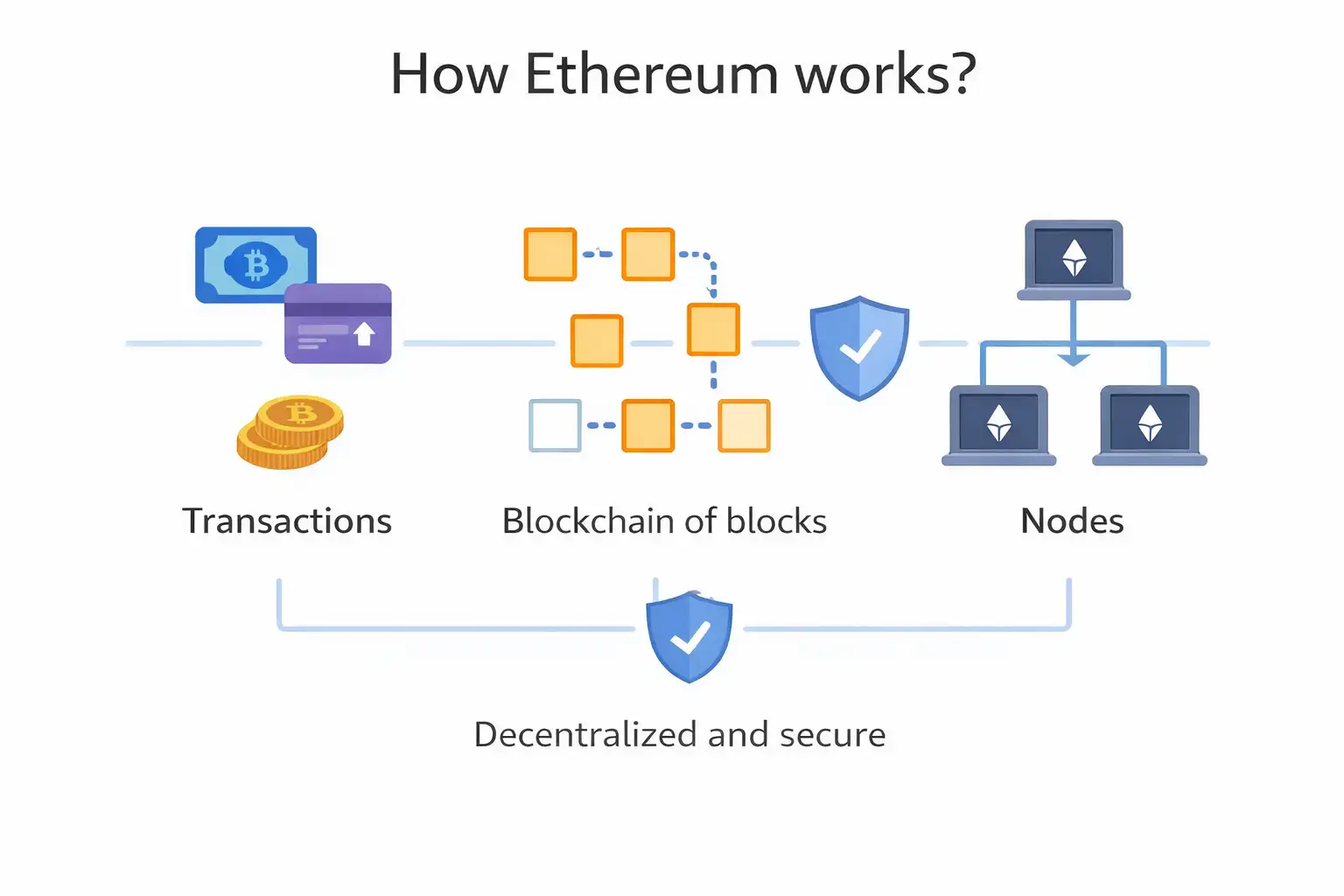
No single node controls the record. If one goes offline, the rest carry on. That is what makes the network resistant to attack and censorship. We wrote everything about how Ethereum works in a separate article.
The blockchain and how transactions are verified
Since September 2022, Ethereum has used proof of stake to verify transactions. Before that, it used proof of work, the same energy-heavy method Bitcoin still uses today.
Under proof of stake, validators lock up ETH as collateral. They are chosen to propose and approve new blocks. Honest validators earn ETH rewards. Validators who act dishonestly lose part of their stake. That risk is what keeps the network honest.
Solo validators need a minimum of 32 ETH to run a node. Since the Pectra upgrade in May 2025, a single validator can stake up to 2,048 ETH, which reduced the total number of validators needed and cut overhead for large staking operators significantly.
The switch from proof of work to proof of stake happened in September 2022 and cut Ethereum’s energy use by more than 99%. It was called The Merge.
What is the Ethereum Virtual Machine (EVM)?
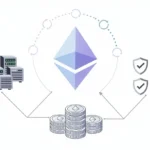
The Ethereum Virtual Machine, or EVM, is the environment where smart contracts run. Every node on the network runs an identical copy of the EVM. When a smart contract executes, every node runs it simultaneously and confirms the result.
This is what makes Ethereum programmable. Developers write code in a language called Solidity, deploy it to the network, and the EVM runs it. The contract lives on the blockchain permanently. Nobody can delete it or alter it after deployment.
Gas fees: why you pay to use Ethereum
Every action on Ethereum costs a small fee paid in ETH. That fee is called gas. Read more about this in the article what are Ethereum gas fees.
Gas compensates the validators who process your transaction. It also prevents spam. Without a cost attached, someone could flood the network with junk transactions and slow everything down.
Gas prices change based on how busy the network is. During peak hours, a simple token swap can cost a few dollars. During quiet periods, the same transaction might cost cents. Etherscan’s gas tracker shows live prices.
Since the London upgrade in August 2021, a portion of every gas fee is burned, meaning it is permanently removed from circulation. This makes ETH gradually more scarce over time.
What is Ether (ETH) and how is it different from Ethereum?
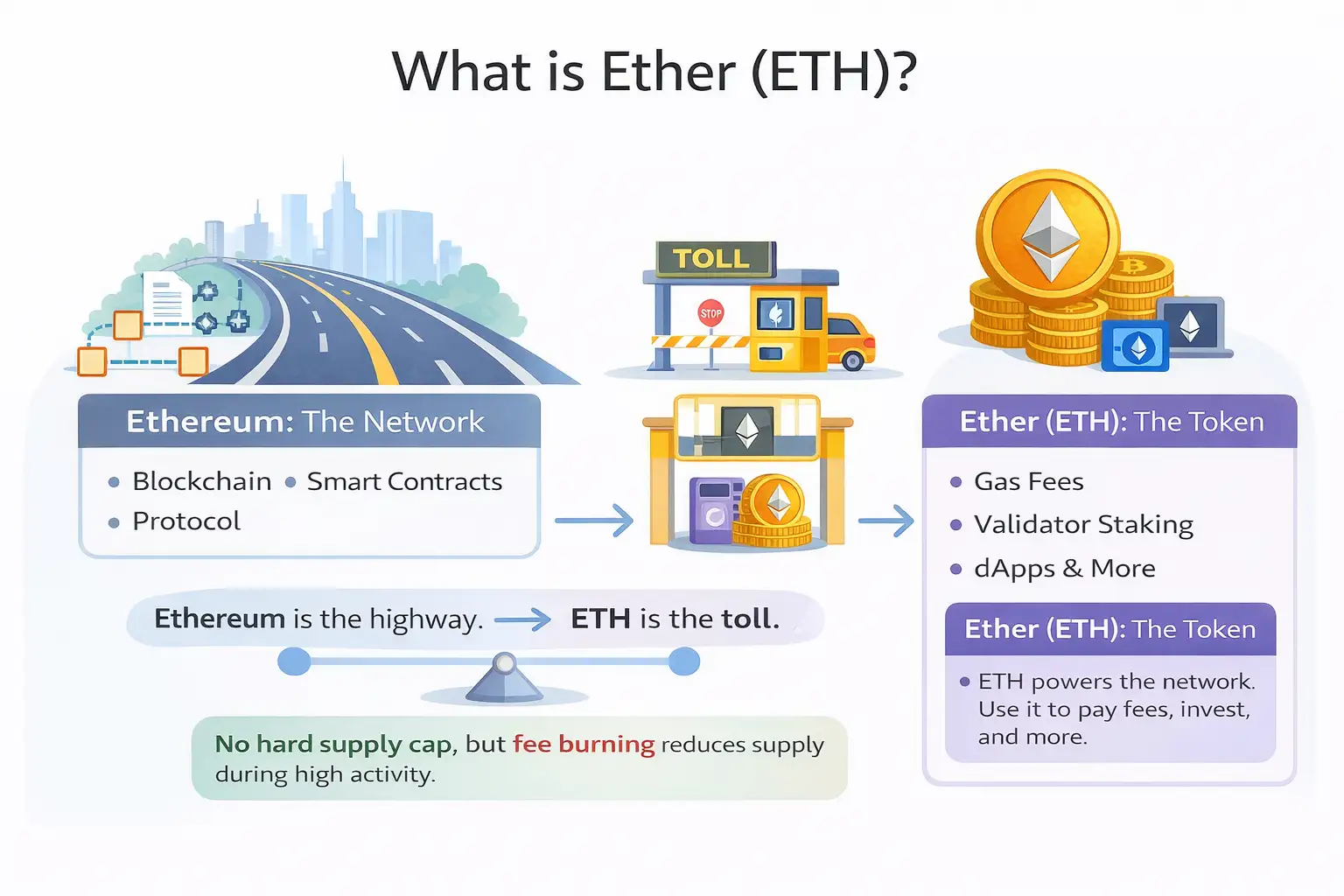
People use the names interchangeably, but they are not the same thing.
Ethereum is the network: the blockchain, the smart contract platform, the protocol.
Ether (ETH) is the token that powers it. You need ETH to pay gas fees, to stake as a validator, and to interact with most applications built on the network.
A good analogy: Ethereum is the highway. ETH is the toll you pay to drive on it.
ETH has no hard supply cap, unlike Bitcoin’s 21 million limit. But the fee-burning mechanism introduced in 2021 means that during periods of high activity, more ETH is destroyed than created. During those stretches, the supply actually shrinks.
What can you do with Ethereum?
The short answer: a lot more than you can do with Bitcoin. Ethereum was designed to be programmable. That single design choice opened the door to an entire industry built on top of it.
DeFi: banking without a bank
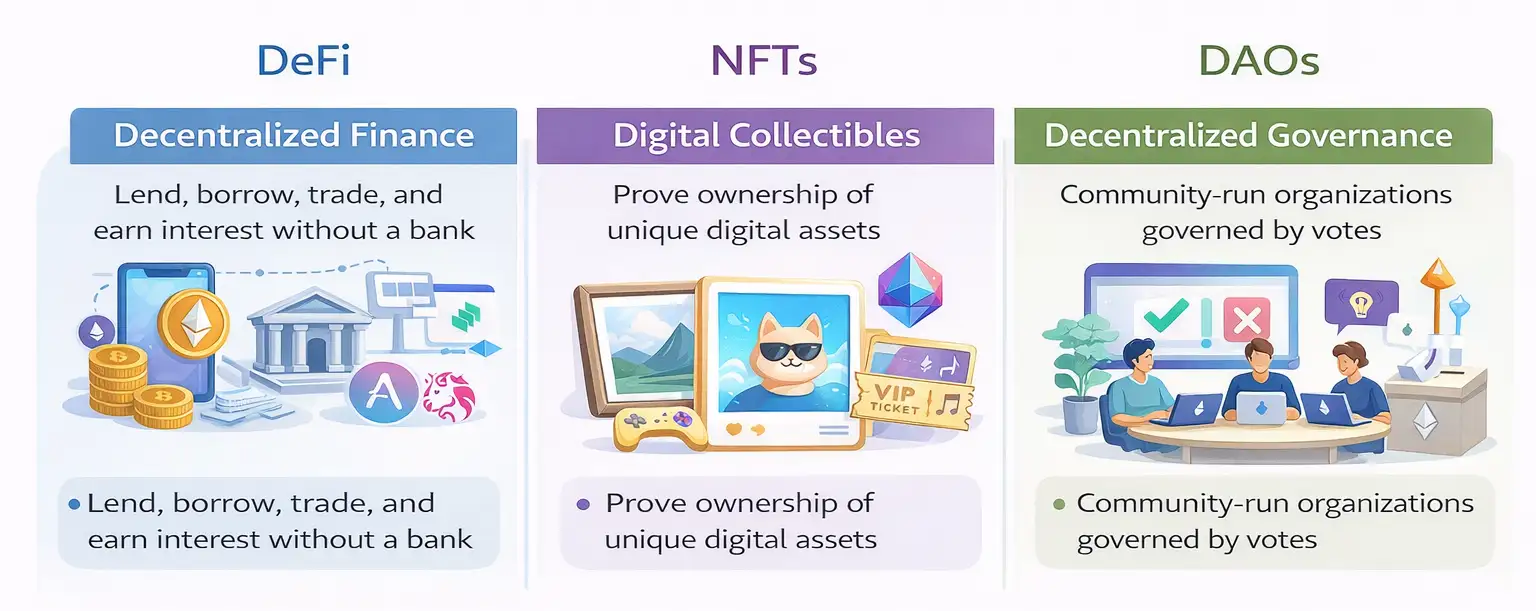
Decentralized finance (DeFi) is a set of financial services that run on Ethereum without intermediaries. You can lend, borrow, trade, and earn interest directly from your wallet. No account approval, no credit check, no bank hours.
Protocols like Uniswap let you swap tokens peer-to-peer. Aave lets you borrow stablecoins against your ETH. Compound pays interest on deposits. All of it runs on smart contracts, 24 hours a day.
At its peak, DeFi protocols on Ethereum held more than $100 billion in assets. As of early 2026, the total value locked across Ethereum DeFi still runs in the tens of billions.
NFTs: digital ownership on Ethereum
Non-fungible tokens (NFTs) are unique digital assets recorded on the Ethereum blockchain. Unlike ETH, which is interchangeable, each NFT is one of a kind. Ownership is verifiable by anyone, at any time, on the public ledger.
Artists sell original digital works as NFTs. Game studios use them for in-game items. Musicians release albums with NFT-gated access. The technology works because the blockchain records who owns what, and that record cannot be forged.
The NFT market peaked in 2021 and 2022, collapsed sharply, and has since found steadier, more practical use cases in ticketing, gaming, and digital collectibles.
DAOs and decentralized governance
A DAO, or decentralized autonomous organization, is a group that makes decisions through smart contracts rather than a board of directors. Members vote using governance tokens. Proposals that pass execute automatically on-chain.
The Ethereum network itself is governed in a similar way. Major protocol changes require broad consensus from developers, node operators, and the wider community. No single entity has the authority to push through an update alone.
Ethereum vs Bitcoin: the main difference
Bitcoin and Ethereum are both decentralized blockchains. That is roughly where the similarity ends.
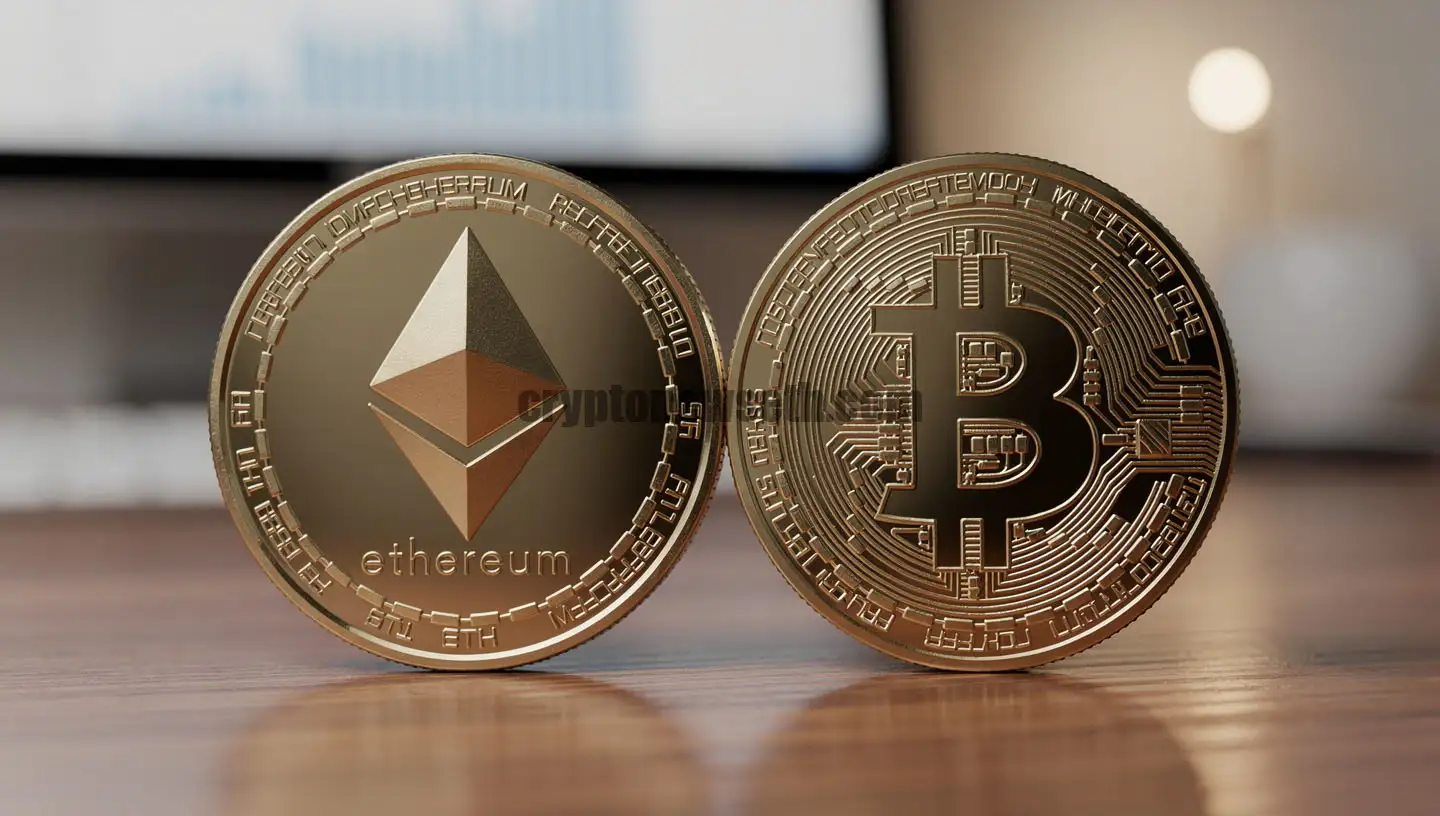
Bitcoin was built to be digital money. It does one thing: transfer value. It does that well. Its code is deliberately simple. Developers rarely change it. Many people treat Bitcoin as a store of value, comparable to gold.
Ethereum was built to be programmable infrastructure. Smart contracts, DeFi, NFTs, stablecoins: all of it depends on Ethereum. Its code is updated regularly. New capabilities are added through hard forks. It is less conservative and more experimental than Bitcoin.
Bitcoin has a fixed supply of 21 million coins. Ethereum has no hard cap, but the burn mechanism keeps issuance in check.
Both networks are genuinely decentralized. Neither is controlled by a company or government. But they are built for different purposes, and the communities around them hold different views about what a blockchain should be.
Is Ethereum safe to use?
The Ethereum network itself has never been hacked. The underlying protocol, the consensus mechanism, the EVM: none of it has been successfully exploited at the base layer.
That does not mean Ethereum is risk-free. Most attacks happen at the application level, not the protocol level. A poorly written smart contract can be drained. A phishing site can steal your wallet credentials. A bridge connecting Ethereum to another chain can be compromised.
The risks are real, but they are manageable. Keep your ETH in a hardware wallet if you hold a meaningful amount. Use only well-audited DeFi protocols. Never share your seed phrase.
The network has been running without a base-layer failure since 2015. Over a decade of uninterrupted operation is the strongest safety signal it has.
Ethereum in 2026: what is happening now?
Ethereum’s roadmap is organized around a series of upgrades named after cities. The Pectra upgrade went live on 7 May 2025. It bundled 11 Ethereum Improvement Proposals, making it the largest single upgrade since The Merge. The most impactful change for most stakers: validators can now hold up to 2,048 ETH instead of being capped at 32 ETH, which lets large operators consolidate dozens of validator nodes into one. Deposit processing time also dropped from roughly 12 hours to about 13 minutes.
The next major upgrade after Pectra is Fusaka, which will expand blob capacity from a target of 6 blobs per block to 32, with a maximum of 52. That change is designed to push Layer 2 transaction costs even lower. Layer 2 networks, including Arbitrum, Optimism, and Base, already process the majority of Ethereum transactions. Fusaka is built to make them cheaper still.
Spot Ethereum ETFs began trading on US markets in July 2024. BlackRock, Fidelity, and several other institutions now hold ETH directly on behalf of investors. By early 2026, total institutional ETH holdings through these products have grown substantially, changing the demand picture compared to a few years ago.
Ethereum still faces real competition. Solana processes transactions faster and more cheaply at the base layer. Other chains have carved out niches. But Ethereum holds the largest developer community, the most established DeFi ecosystem, and the deepest liquidity of any smart contract platform.
You can track the current ETH price and network stats on CoinGecko.
FAQ
What is Ethereum in simple terms?
Ethereum is a programmable blockchain. It lets developers build applications that run without central control. Its native currency is Ether (ETH), which pays for transactions and secures the network through staking.
Is Ethereum a cryptocurrency?
Yes and no. Ether (ETH) is the cryptocurrency. Ethereum is the network it runs on. The distinction matters: Ethereum is a platform; ETH is the token that powers it.
What is the difference between Ethereum and Bitcoin?
Bitcoin is designed to transfer value. It is digital money with a fixed supply of 21 million coins. Ethereum is designed to run programmable applications, including DeFi, NFTs, and smart contracts. Bitcoin changes slowly and deliberately. Ethereum updates frequently and takes more technical risk.
How many Ethereum coins are there?
There is no hard cap on ETH supply. As of early 2026, around 120 million ETH are in circulation. The fee-burning mechanism introduced in 2021 destroys a portion of every transaction fee, which slows net issuance and has occasionally put supply in deflation during high-activity periods.
Is Ethereum a good investment?
That depends entirely on your risk tolerance and time horizon. ETH has a history of large price swings in both directions. It has fundamental utility as the gas token for the most-used smart contract network. This is not financial advice. Do your own research before putting money in.
Can I buy less than 1 Ethereum?
Yes. ETH is divisible to 18 decimal places. The smallest unit is called a wei. You can buy any amount, even a few dollars’ worth, on any major exchange.
Is it safe to invest in Ethereum?
The network itself has a strong ten-year security track record. The investment risk is market volatility, not protocol failure. ETH can and has lost more than 80% of its value during bear markets. If you hold ETH, use a hardware wallet and never share your seed phrase.
What will Ethereum be worth in 2026?
Nobody knows. Price predictions for any asset are uncertain, and crypto is more volatile than most. For a full breakdown of analyst forecasts and the factors driving them, read our Ethereum price prediction for 2026.
Can Ethereum be converted to cash?
Yes. You can sell ETH on any major exchange, including Coinbase, Kraken, and Binance, and withdraw the proceeds to your bank account. The process typically takes one to three business days depending on your country and payment method.
What is Ethereum staking?
Staking means locking up ETH to help secure the network. Validators earn ETH rewards for doing so, currently around 3 to 4% annually. Running a solo validator requires a minimum of 32 ETH. Since the Pectra upgrade in May 2025, a single validator can hold up to 2,048 ETH, which makes compounding rewards automatic without spinning up new nodes. If you do not have 32 ETH, liquid staking services like Lido or Rocket Pool let you stake any amount. Read our full guide to staking Ethereum for a step-by-step breakdown.