Ethereum has eight co-founders. That number is unusual for any tech project, let alone one that became the second-largest blockchain in the world. Most crypto projects credit one or two people. Ethereum credits eight, each of whom played a different role in turning a white paper into a working network.
The primary creator is Vitalik Buterin, a Russian-Canadian programmer who wrote the original white paper at age 19. But the network that launched in 2015 was built by a group with very different backgrounds, motivations, and ideas about what Ethereum should become. Several of them left before the network went live. Only one is still actively working on it today.
Below is the full story: who each person was, what they built, and where they ended up.
Vitalik Buterin: the person who started it
Vitaly Dmitrievich Buterin was born on January 31, 1994, in Kolomna, a city about 100 kilometres southeast of Moscow. His father, Dmitry, was a computer scientist. When Vitalik was six, the family moved to Canada.
In Canadian elementary school, he was placed in a program for gifted children. He could add three-digit numbers in his head twice as fast as his classmates. He later attended The Abelard School, a private high school in Toronto, where he developed what he described as a hunger for learning as a primary goal in life.
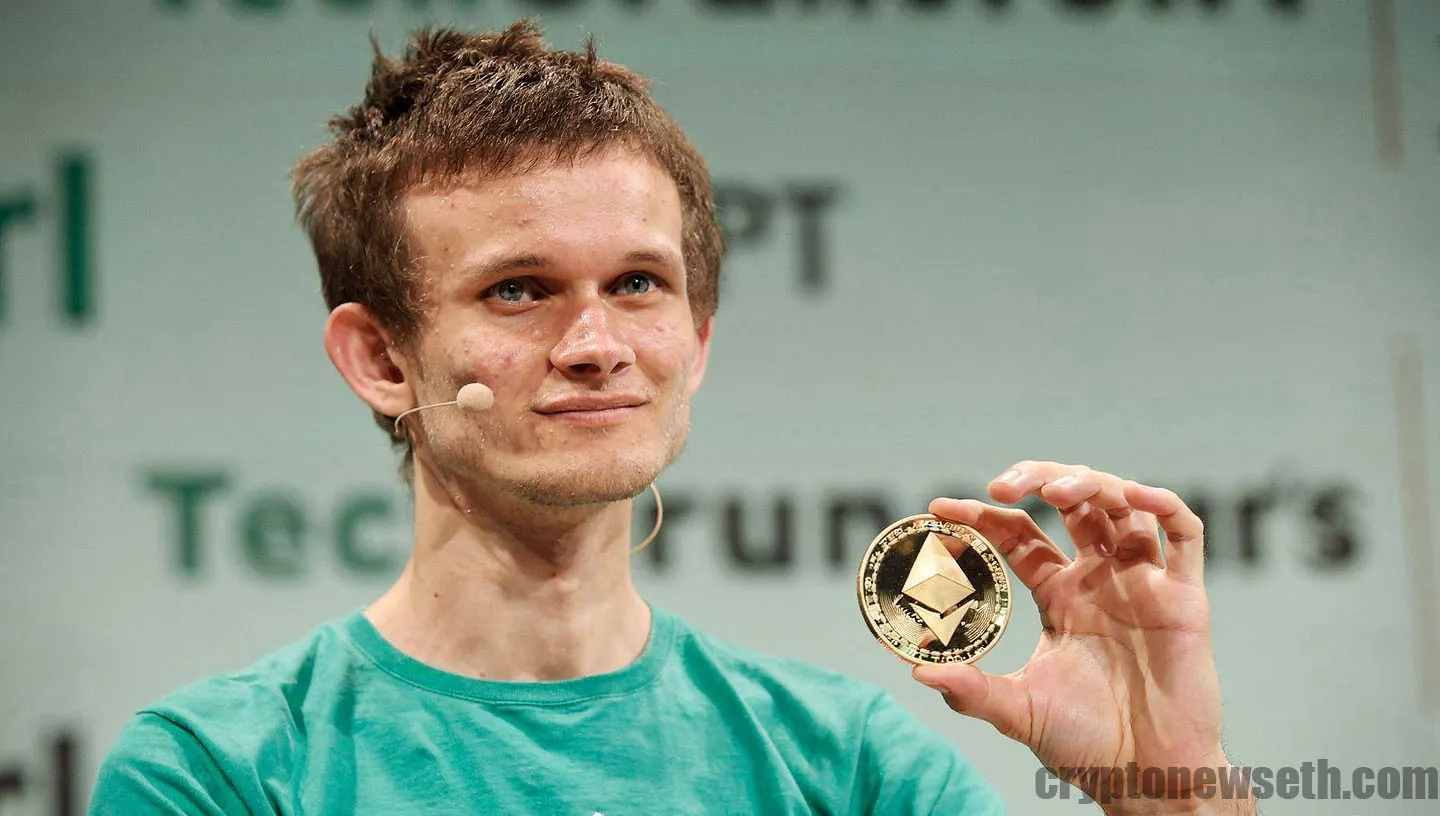
From 2007 to 2010, he played World of Warcraft. When the game company removed a damage component from a spell his character used, he was devastated. He later described that moment as the point when he understood what centralized control over a system means for the people who depend on it. If you have ever lost progress in a game because a company changed the rules overnight, you understand the feeling. He quit the game and never went back.
His father introduced him to Bitcoin in 2011, when Vitalik was 17. He was initially skeptical, unable to see how something with no physical backing could hold value. Over time, he became absorbed in the subject. He had no money to buy Bitcoin and no computer powerful enough to mine it, so he found a different way in: writing. He started contributing articles to Bitcoin forums, earning around 5 BTC per piece.
In September 2011, he connected with Mihai Alisie, a Romanian Bitcoin enthusiast, and together they co-founded Bitcoin Magazine. It was the first serious publication dedicated to cryptocurrency. By 2012, it had a print edition.
Buterin enrolled at the University of Waterloo in 2012 to study computer science, where he worked as a research assistant for cryptographer Ian Goldberg. That same year, he won a bronze medal at the International Olympiad in Informatics in Italy. By 2013, crypto work was taking up over 30 hours of his week. He dropped out.
He later described that decision in his own words: “In 2012, I entered the University of Waterloo; in 2013 I realized that crypto projects were taking up 30 hours a week of my time, so I dropped out. I went around the world, explored many crypto projects, and finally realized that they were all too concerned about specific applications and not being sufficiently general.”
That last point is the one that matters. Every project he visited solved one specific problem. Nobody was building a general platform. That gap is what Ethereum was designed to fill.
The white paper: november 2013
When Buterin returned to Toronto, he had a clear idea. Bitcoin was a calculator. He wanted to build a smartphone. A blockchain that could run any kind of application, not just currency transfers.
He had argued to Bitcoin developers that the network needed a more general scripting language. The community was not interested. So he decided to build something new.
In November 2013, he wrote the Ethereum white paper and sent it by email to a small group of people he trusted. The message went to around 13 contacts. They forwarded it. Within weeks, around 30 people had reached out to him.
The paper proposed a blockchain with a Turing-complete programming language built in. That meant developers could write any kind of logic directly onto the chain, not just simple payment instructions. These programs are called smart contracts: agreements coded directly onto the blockchain, with no intermediary needed to enforce them. The examples Buterin gave ranged from crop insurance to decentralized exchanges to voting systems.
He chose the name Ethereum while browsing a list of science fiction elements on Wikipedia. He liked that the word contained “ether,” a reference to the hypothetical invisible medium once thought to carry light through space. To him, it sounded like something that could underpin an entire platform. You can read about how Ethereum works in our separate article.
Miami, january 2014: the first public appearance
On January 26, 2014, Buterin presented Ethereum at the North American Bitcoin Conference in Miami. He gave a 25-minute speech describing it as a general-purpose global computer operating on a decentralized, permissionless network.
Before the conference, Anthony Di Iorio had proposed that the growing team rent a house in Miami together. They did. Several people who would become co-founders met in person for the first time, including Gavin Wood, who had contacted Buterin after a mutual friend shared the white paper. They worked through the week, debating what Ethereum could become.
The presentation went well. Ethereum attracted serious attention. The team began expanding.
The eight co-founders
Ethereum ended up with eight co-founders in total. The first five were involved from December 2013. The remaining three joined in early 2014.
Mihai Alisie

Mihai Alisie was a Romanian tech entrepreneur and one of the original five. He and Buterin had co-founded Bitcoin Magazine in 2011. When Buterin circulated the white paper, Alisie was one of the first to join. He played a key role in setting up the legal and financial structure of Ethereum in Switzerland, and served as Vice President of the Ethereum Foundation until 2015. He later founded AKASHA, a decentralized social network built on Ethereum.
Anthony Di Iorio
Anthony Di Iorio was an early Bitcoin investor based in Toronto who had organized Bitcoin meetups across Canada through the Bitcoin Alliance of Canada. He was one of the original five co-founders and provided early financial backing for the project.

When the white paper landed in his hands, he passed it to Charles Hoskinson for a second opinion. Di Iorio later founded Decentral, a Toronto-based crypto company, and the Jaxx Liberty wallet. In 2021, he sold his crypto holdings and stepped back from the industry entirely, citing security concerns.
Charles Hoskinson
Charles Hoskinson was born in Hawaii and raised in Colorado. He had a background in mathematics and had previously worked on raising capital for an early decentralized exchange. Di Iorio introduced him to Buterin after reading the white paper.

Hoskinson became one of the original five co-founders and was named CEO of Ethereum in December 2013. He took a leading role in setting up the Swiss legal framework and the Ethereum Foundation. But his approach to running the project created friction. He wanted Ethereum to operate as a for-profit company, attracting institutional investors and building a structure closer to a conventional tech startup. Buterin and others wanted a nonprofit, open-source model.
The conflict came to a head at a meeting in Zug, Switzerland, on June 7, 2014. Gavin Wood reportedly gave Buterin an ultimatum: either Hoskinson goes, or Wood does. After stepping away to think on the terrace, Buterin returned and announced his decision. Hoskinson and Amir Chetrit would be removed from their active roles. Buterin later recalled: “I made this speech that consisted of half a minute of filler, followed by the real decision, which was that Charles and Amir would be fired. They were disappointed but not absolutely surprised.”
Hoskinson went on to found IOHK, an engineering company, and launched Cardano in 2017. He remains one of the most prominent and combative personalities in the industry.
Amir Chetrit
Amir Chetrit, a computer science enthusiast from Israel, is the least publicly known of the eight. He met Buterin at a Bitcoin event in Amsterdam in 2013 and was invited to join the original five.
At the June 2014 meeting in Zug, he came under pressure from other co-founders and developers over his limited contributions to the project. He agreed to step down from his active role but remained a co-founder on record. He has since kept a very low profile, supporting various blockchain projects without seeking attention.
Gavin Wood
Gavin Wood is an English computer scientist from Lancaster. He earned a doctorate from the University of York in 2005. Before crypto, he worked as a research scientist at Microsoft. Bitcoin evangelists Amir Taaki and Johnny Bitcoin introduced him to the Ethereum white paper. He contacted Buterin directly and offered to write a C++ implementation of the protocol.
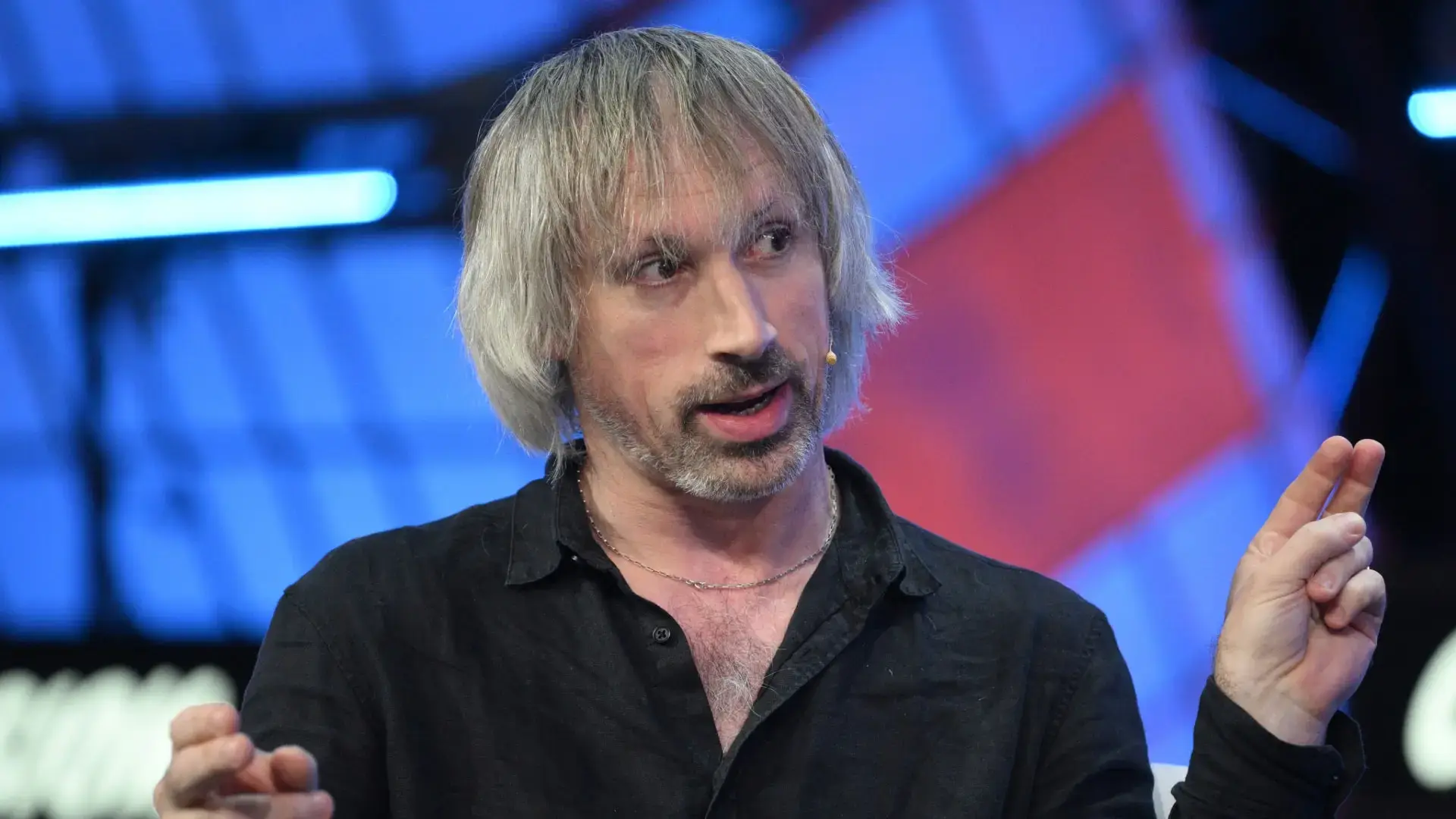
If you want to understand why Ethereum can run smart contracts at all, Wood is the person most responsible. He wrote the Ethereum Yellow Paper, the formal technical specification that turned Buterin’s ideas into precise engineering. He created Solidity, the programming language developers still use to write smart contracts today. He defined the Ethereum Virtual Machine (EVM), the environment in which those contracts execute. And he coined the term Web3.
He served as CTO of the Ethereum Foundation until early 2016, when he left, citing frustration with the pace of development. He founded Parity Technologies and later proposed and launched Polkadot, a competing multi-chain network, in 2020.
Joseph Lubin
Joseph Lubin graduated from Princeton University in 1987 with a degree in electrical engineering and computer science. He worked at Goldman Sachs before moving into tech startups. He came to Bitcoin through the Bitcoin Alliance of Canada, where he met Di Iorio. Di Iorio introduced him to the Ethereum project in early 2014.
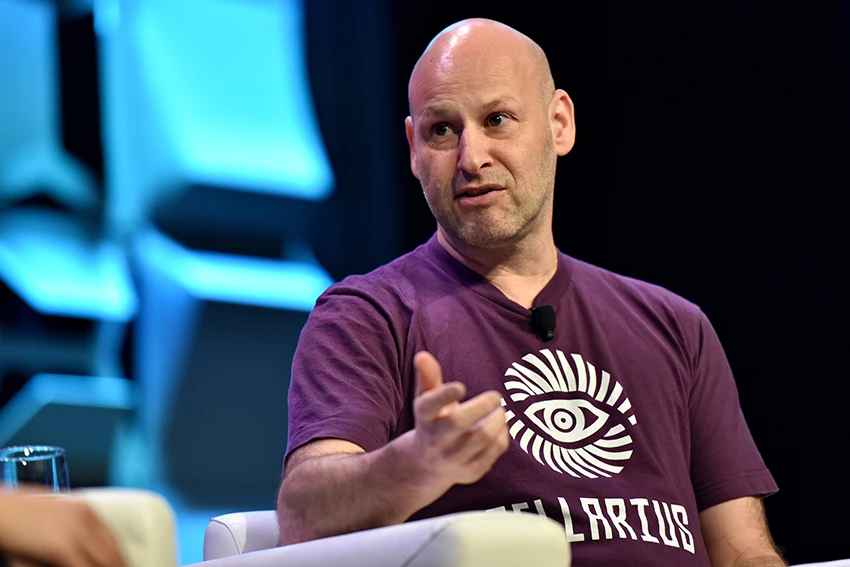
Lubin co-founded the Ethereum Foundation and brought a level of business and operational experience the team otherwise lacked. After the network launched, he founded ConsenSys, a Brooklyn-based company that builds infrastructure, tools, and applications for the Ethereum ecosystem. ConsenSys created MetaMask, Infura, and several other widely used Ethereum products. Lubin remains involved in Ethereum to this day.
Jeffrey Wilcke
Jeffrey Wilcke is a programmer who joined the project in early 2014. He wrote a complete implementation of the Ethereum protocol in Google’s Go programming language. That implementation became Go Ethereum, known as Geth, and it remains the most widely used Ethereum client to this day. Wilcke and Wood were working in parallel without knowing it at first. Having two separate implementations turned out to be useful: each caught errors the other missed.
After the DAO hack and a series of stressful events, Wilcke handed supervision of Geth to Peter Szilagyi and stepped back from Ethereum. With his brother Joey, he founded Grid Games, a game development studio.
The Zug meeting and what it decided
On June 7, 2014, all eight co-founders gathered at a rented house in the woods near Zug, Switzerland, nicknamed “the spaceship.” The purpose was to sign incorporation documents and formalize Ethereum as a company. They never signed.
The meeting became a full-day argument. The central dispute was the same one that had been building for months: should Ethereum become a commercial company or a nonprofit foundation? Hoskinson led the case for commercial. Buterin led the case for nonprofit. Wood delivered an ultimatum.
Buterin took time alone and came back with a decision. Ethereum would become a nonprofit foundation. Hoskinson and Chetrit were removed from active roles. All eight remained co-founders on record, and that is how they are listed to this day.
The Ethereum Foundation was registered in Switzerland as a nonprofit organization, tasked with funding and supporting Ethereum’s open-source development.
The crowdsale: summer 2014
To fund development, the Ethereum Foundation ran a public token sale from July 22 to September 2, 2014. Over 42 days, anyone with Bitcoin could participate. The price started at 2,000 ETH per BTC and declined over the course of the sale.
The sale raised 31,591 BTC, worth approximately $18.4 million at the time. Around 60 million ETH were sold at roughly $0.30 per token. It was one of the largest crowdfunded projects in internet history up to that point.
In June 2014, shortly before the crowdsale opened, Buterin received a $100,000 Thiel Fellowship grant. The fellowship comes from Peter Thiel’s foundation and goes to promising people under 23 who leave university to build something. Buterin had already decided to drop out. The grant confirmed the direction he had taken.
Launch: july 30, 2015
After 18 months of development and multiple test releases, the Ethereum network went live on July 30, 2015, under the codename Frontier. It was a command-line release built for developers, not general users. The genesis block contained 8,893 transactions allocating ether to crowdsale contributors. The block reward was 5 ETH per block.
ETH traded below $1 in the weeks after launch. The network was functional but rough. It was a beginning, not a finished product. If you want to understand what Ether (ETH) is and how it has changed since that first block, our guide covers what it does and why it has value.
Where are the co-founders now?
Of the eight original co-founders, only Vitalik Buterin remains actively involved in Ethereum. He continues to write research papers, propose upgrades, and guide the network’s long-term direction.
Gavin Wood leads the Polkadot ecosystem through the Web3 Foundation and Parity Technologies. Charles Hoskinson runs IOHK and continues to develop Cardano. Joseph Lubin runs ConsenSys, which builds tools that power much of the Ethereum application layer. Mihai Alisie works on AKASHA. Anthony Di Iorio has left the industry. Jeffrey Wilcke makes video games. Amir Chetrit stays out of the public eye.
The network they built together handles hundreds of billions of dollars in value. None of them could have built it alone, and most of them could not stay in the same room for long. That tension, as much as the technology, shaped what Ethereum became.
FAQ
Who created Ethereum?
Ethereum was created by eight co-founders. Vitalik Buterin wrote the original white paper in November 2013 and is the primary creator. The other seven are Gavin Wood, Joseph Lubin, Anthony Di Iorio, Charles Hoskinson, Mihai Alisie, Amir Chetrit, and Jeffrey Wilcke.
How old was Vitalik Buterin when he created Ethereum?
Buterin was 19 years old when he wrote the Ethereum white paper in November 2013. He turned 20 in January 1994, shortly after the public launch at the North American Bitcoin Conference in Miami.
Why did Vitalik Buterin create Ethereum?
Buterin believed Bitcoin’s scripting language was too limited for building complex applications. After failing to convince Bitcoin developers to add a more general-purpose language, he decided to build a new platform from scratch. He wanted a blockchain that could run any kind of decentralized application, not just currency transactions.
What did Gavin Wood contribute to Ethereum?
Gavin Wood wrote the Ethereum Yellow Paper, the technical specification for the Ethereum Virtual Machine. He also created Solidity, the programming language used to write smart contracts, and coined the terms EVM and Web3. He served as CTO of the Ethereum Foundation until early 2016.
Why did Charles Hoskinson leave Ethereum?
Hoskinson wanted Ethereum to operate as a for-profit company and took a commercial approach to running the project as CEO. Buterin and the rest of the team wanted a nonprofit structure. At a meeting in Zug, Switzerland, on June 7, 2014, Buterin made the decision to proceed as a nonprofit and removed Hoskinson from his active role.
How was Ethereum funded?
Ethereum was funded through a public crowdsale that ran from July 22 to September 2, 2014. Over 42 days, the team sold approximately 60 million ETH at around $0.30 per token, raising 31,591 BTC worth $18.4 million at the time.
When did Ethereum launch?
Ethereum launched on July 30, 2015, under the codename Frontier. It was a command-line release aimed at developers. The genesis block contained 8,893 transactions allocating ether to early contributors and a block reward of 5 ETH per block.
Is Vitalik Buterin still involved with Ethereum?
Yes. Buterin is the only one of the eight original co-founders who remains actively involved in Ethereum. He continues to propose protocol improvements, publish research, and guide the network’s long-term direction.